Outdoor Lighting Orange County: Suppress Appeal and Security
Twilight modifications how a home reads from the street. The roofline fades, shadows take over, and the architectural bones either soften or hone depending on how you light them. In Orange County, where area pride runs high and visitors seldom appear before sundown on a summer Friday, the ideal outdoor lighting does more than reveal individuals where to stroll. It can make a front elevation feel made up, assist video cameras see faces, and send out a quiet message that the property is well cared for.
I have strolled countless lawns at sunset with homeowners and property managers from San Clemente to Yorba Linda, then come back after dark with mockups to see what the eye in fact catches. A little restraint beats raw wattage each time. The very best results come from mixing design judgment, weather-resistant products, and circuitry that will not leave you digging again in a year. Along the method, there are real code and safety information to navigate in California, so having a licensed electrician Orange County trusts makes a difference.
What great lighting does for curb appeal
Think of outside lighting as layers that work together. Ambient layers set the total state of mind. Job layers make entries, steps, and address numbers understandable. Accent layers add depth by grazing stone, backlighting trees, or creating shapes. You do not require lots of components to get this right. You need the best ones, intended with intention.
A common Orange County front elevation might have smooth stucco, a tiled patio, low hedges, and a pair of queen palms or olives. For this canvas, 2700 to 3000 Kelvin LEDs keep warm color that flatters neutral stucco and wood tones. A color rendering index near 90 helps natural materials look like themselves and avoids the waxy complexion impact you see with cheap lights. Keep most accents in between 150 and 500 lumens. Wider beam spreads, 35 to 60 degrees, keep you from creating tight hot spots that look theatrical. Use narrow 10 to 25 degree beams only when you are purposefully highlighting a column, an address plaque, or a sculpture.
Height and angle matter as much as specifications. We intend wall grazers low and near the surface area to reveal texture without glare spilling into the street. For trees, keep uplights simply outside the drip line, tilt a little throughout the trunk, and let the canopy glow. On palm fronds, a narrow beam from the base draws the eye up, but on mature olive canopies I choose 2 softer beams crossing to fill the crown without punching holes of light.
Front doors deserve unique attention. Light from the latch side offers a visitor's face shape on an electronic camera. If you add a pendant or sconce, search for JA8-qualified LED sources for California Title 24 compliance and shield the light so you see the door, not the source of light. In high-gloss black doors, glare control is your friend.
Security lighting that works instead of blinds
Security lighting makes its keep when it assists people see, hinders casual trespass, and feeds tidy video to your electronic cameras. It fails when it blinds you leaving the garage or creates severe pockets that make everything else darker by comparison.
Uniformity beats brightness. A path that holds a mild 0.5 to 2 footcandles from the driveway to the entry keeps eyes comfortable and decreases journey threat. Movement sensors help in side backyards and service zones where continuous light feels intrusive. I have had good luck placing medium-throw movement components about 7 to 9 feet high, protected to keep light on the residential or commercial property. Numerous homes gain from an astronomic timer that sets a dusk to 11 p.m. Baseline, then defaults to motion-activated levels overnight.
Camera positioning with lighting is easy to ignore. If you are using a doorbell electronic camera, sidelight from a patio sconce is perfect. For driveway cameras, install fixtures behind or above the electronic camera view to avoid flare. If a cam has decent low-light performance, you can call your lighting back and still catch detail.
The security discussion often wanders towards floodlights with raw lumen numbers. I hardly ever suggest the greatest output designs on tight suburban lots. They produce glare, frustrate neighbors, and draw in pests. Protected area lights, soffit downlights at the eaves, and mild step lights produce a stitched-together field of exposure that is kinder on the eye and still discourages opportunistic problems. A residential electrician Orange County property owners count on will aim those components on a dark night and make little modifications that pay off in day-to-day use.
Local truths: what Orange County residential or commercial properties demand
Lighting in Costa Mesa is not the like lighting in Coto de Caza. The microclimates here shape product choices and maintenance.
Salt air near the coast accelerates deterioration. Spending plan aluminum components look fine on the first day, but within 18 months the powder coat can chalk and peel. Solid brass or copper holds up and weathers to a dignified patina, and marine-grade stainless hardware assists. Along the coast I also look for gaskets that stay supple and a lens that seals well versus fog intrusion. Inland locations see wedding day to night temperature level swings, which can pull wet air through inferior seals and fog lenses too.
Santa Ana winds test stakes and installs. Deep spikes, gravel sleeves, or surface-mount bases with stainless anchors keep directional lights stable. In plant-heavy backyards, choose fixtures that can move up and out with development. Do not bury an in-grade well near a thirsty ficus and anticipate to find it a year later.
Homeowners associations and city regulations matter. Lots of HOAs anticipate warm color temperatures, shielded fixtures, and limits on uplighting. Cities concentrate on light trespass and annoyance glare. Shielding and mindful aiming typically fix issues. If a customer wants to wash a 2nd story completely, we talk through the result from across the street rather than just the driveway perspective.
California Title 24 energy codes use to attached domestic outside lighting. High efficacy sources are the baseline, and a lot of fixtures need automated controls like photocells or motion sensing units. A licensed electrician Orange County CA installers trust will pick JA8-labeled lights where required and match them with compliant controls. For business residential or commercial properties, Title 24 takes a stricter stance with mandatory shutoff, daytime action where relevant, and recorded approval testing.

Wiring that lasts: low voltage versus line voltage
Most landscape accents and path lights in Orange County are low voltage, 12 or 15 volt systems powered by a step-down transformer. They are more secure to work around, easier to customize, and easier to target at night. Line voltage, 120 volt circuits, still have a place for architectural sconces, bollards with greater outputs, or long driveway runs where voltage drop becomes a fight.
Transformer sizing is uncomplicated but typically done poorly. Add the load of all linked fixtures, then give yourself 20 to 30 percent headroom. For instance, if a front yard uses twenty 4 watt LED accent lights and 10 3 watt steppers, the connected load is 110 watts. A 150 to 200 watt multi-tap transformer lets you make up for voltage drop on longer runs. Multi-tap outputs, typically 12 to 15 volts, aid deliver appropriate voltage to the last component, so all lights match in brightness.
Voltage drop appears as a dim tail at the end of a daisy chain. We prevent it with heavier cable, home-run electrical wiring, or looped circuits. On a 60 foot planting bed with 8 lights, two smaller runs from the transformer rather of one long string can level levels. As a rule of thumb, keep each run under practical lengths and use 12 gauge cable for common property loads. In deep backyards or estate lots, 10 gauge is not overkill.
Burial depths depend on cable television type and code conditions. Low voltage landscape cable television frequently sits simply below mulch or a couple of inches under soil per listing, however it must be protected from physical damage, kept clear of aeration zones, and sleeved under hardscape. Line voltage wiring follows much deeper burial requirements and should be set up in authorized conduit or ranked direct burial cable, with GFCI defense and in-use covers where you have receptacles. A local electrical expert Orange County teams rely on will know the city inspector's preferences and keep you from repairs after the fact.
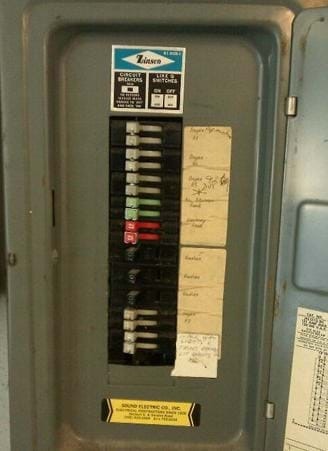
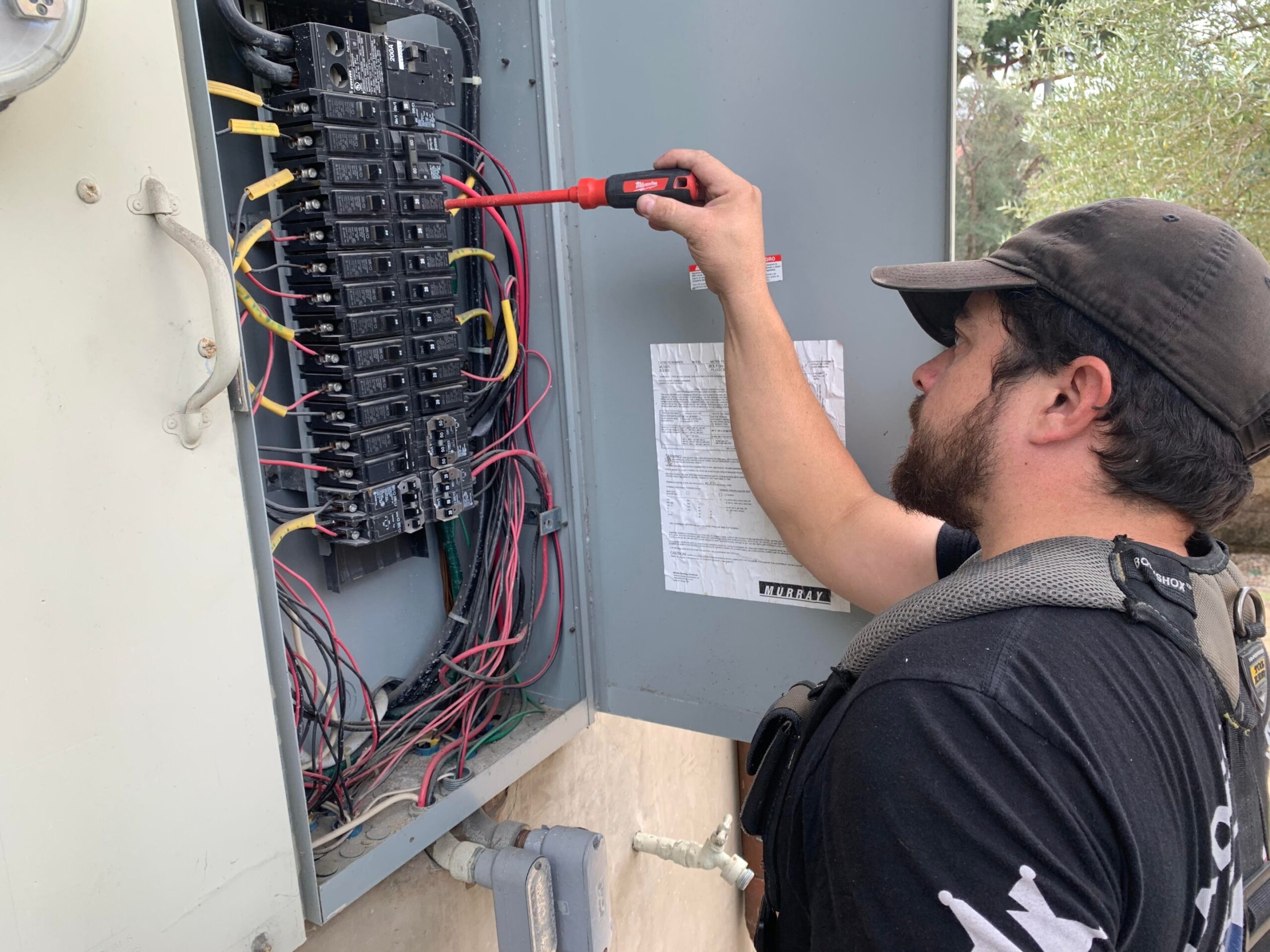
Every outdoor circuit should be GFCI protected. Many likewise require AFCI defense at the panel, specifically when brand-new circuits are included a house. If you are lured to tie a landscape transformer into a random outside outlet, examine the load initially. Old panels groan under accumulated additions. An electrical panel upgrade Orange County property owners take on during improvement can clean up tandem breakers, add surge protection, and make room for devoted outside circuits. On some jobs, a panel replacement Orange County inspectors manage resolves problem tripping and future evidence for later EV battery charger setup Orange County clients prepare down the road.
Controls and wise integration
Controls separate a fundamental lighting layout from a system that runs itself. A simple photocell that turns lights on at dusk and off at dawn brings energy utilize down and keeps the patio inviting. Astronomic timers go one better by tracking the seasons without manual adjustment. I like photocell plus timer combos: dusk to 11 p.m. On, then motion-activated at low levels over night for side yards.
Smart switches, Wi‑Fi centers, and low voltage centers with app control include scenes and schedules. Tie the front course to a "guest arrival" scene that lightens up the driveway, path, and entry for 2 hours, then kicks back. Integrate with your smart home circuitry Orange County integrators set up so geofencing can bring crucial lights on when you are five minutes away. If you have low voltage electrical wiring Orange County remodels typically include for door stations and cams, plan channel or pull strings for future upgrades https://jsbin.com/domiguwuxa while the trench is open.
Set expectations with Wi‑Fi controls. If your gate controller, driveway lights, and video cameras each rely on marginal signal at the curb, the system will be frustrating. Where possible, pull a hardwired control path or install a hub in a weather-rated enclosure closer to the action. A commercial electrician Orange County centers use can create enterprise-grade outdoor networks for larger estates and campuses.
Fixture choices that endure and look right
Durability and optical control choose whether a system still looks good 3 years in. For path lights, choose cast brass or copper with replaceable hats and stakes you can switch if they flex. For accents, try to find adjustable knuckles with locking teeth, silicone seals, and serviceable LED modules. Integrated LED components have enhanced, however serviceability still matters. In a decade, a GU5.3 socket and a common MR16 LED lamp are much easier to source than an exclusive driver.
Ingress ratings assist sort marketing from engineering. An IP65 score manages rain and jets of water, which suits most exposed accents. In-grade fixtures require higher sealing, often IP67, to handle short-lived immersion. On homes with watering overspray striking the front beds every morning, pick components with drain paths and breathable membranes that let pressure equalize without pulling moisture inside.
Optics need to match the intent. Elliptical lenses are handy for large hedges. Hex louver inserts tame glare where a component sits near a sidewalk. On second story eaves, recessed or surface area downlights with precise cutoffs offer you clean wash lighting without lighting up the next-door neighbor's bedroom.
California's high efficacy rules push you to LED, which is great. Focus on warm CCT, high CRI, and consistent binning so multiple fixtures from the very same line match. For attached to constructing areas, confirm lamps or components carry the JA8 label where required. A lighting installation Orange County crew that handles property daily will keep submittals tight and spare you last minute component swaps.
A front backyard walkthrough: from driveway to door
Take a typical 60 foot lot in Irvine with a two cars and truck driveway, a curved course, a low wall at the patio, and 2 trees. The driveway gets two shielded eave downlights near the garage doors, each about 900 lumens at 3000K, intended to clean the apron. Your house number sits to the right of the door. Mount a small sconce 66 inches above the landing, lamped with a JA8 3000K source at roughly 450 lumens, protected from direct view. A discreet recessed action light at each riser keeps the ascent readable.
Along the path, 4 low, 18 inch path lights with 2700K 2.5 watt lights produce gentle pools that overlap. Tuck 2 4 watt spots into the planting beds to graze the stucco and reveal texture in between windows. The specimen olive at the corner gets 2 6 watt narrow floods crossed to fill the canopy. A light under the mailbox, typically ignored, makes deliveries easier and keeps the look polished.
Tie the low voltage runs into a 150 watt multi-tap transformer installed out of sight on the side lawn, with a photocell and astronomic timer. Keep the path lights on the 12 volt tap, the longer olive tree operate on 14 volts to make up for length, and stabilize the loads so the last lights match the first. The front eave downlights go on a switch leg with a little in-wall timer tied to a photocell.
All informed, you utilize under 60 watts for the low voltage zones and under 20 watts per eave light. The entry reads positive, the path is easy, and the street side sees glow rather than glare.
Common pitfalls I see, and how to avoid them
Too lots of components too near your house make it look flat and overexposed. Press some accents into the backyard to include depth. Cheap aluminum course lights look dated within a year, bend at the stake, and start tilting. Spend a little bit more on brass and save on replacements. Daisy chaining twenty components on a single low voltage run produces a dim tail and disappointed owner. Break face balanced legs, upsize cable television, and use multi-tap transformers.
On the electrical side, tapping a transformer into a receptacle that already feeds a water fountain pump, holiday lights, and a pressure washer can trigger annoyance tripping. Consolidate load and add a devoted circuit if required. If your panel has plenty of double-stuffed breakers and the cover rattles, it is time to take a look at Orange County electrical repair that often indicates a panel upgrade.
Glare is the opponent. If you can see the lamp from the sidewalk, you will not like it on a nighttime walk. Shield, louver, or move it. For recessed lighting Orange County property owners include at eaves, inspect the cutoff and usage warmer color temperatures so pests do not toss a celebration above the garage every summertime night.
A useful pre-project checklist
- Define the purpose: curb appeal, safety, electronic cameras, entertaining, or all of the above.
- Walk the residential or commercial property at dusk to find risks, dark holes, and unwanted glare.
- Confirm offered power, panel capability, and control preferences before choosing fixtures.
- Check HOA standards and city guidelines about uplighting, color temperature level, and hours.
- Set a practical budget plan variety and decide where quality matters most, such as components and transformers.
Budgets and scopes that make sense
A small townhouse entry and path can look great with 6 to 10 low voltage components, a 75 to 150 watt transformer, and a photocell timer. Expect a professionally set up system in the ballpark of 1,500 to 3,000 dollars, depending on access and component quality. A mid-size single family home with front backyard layering, tree accents, eave lights at the garage, and side lawn movement protection often lands between 3,000 and 8,000 dollars. Bigger homes with long driveways, numerous trees, and hardscape lighting can reach 10,000 to 30,000 dollars and beyond, especially if trenching throughout mature landscaping or coring through masonry is required.
Commercial homes scale in a different way. A store retail plaza in Orange or Fullerton may require bollards along the walkways, pole lights at the lot, and code-compliant controls with timeclock and photocell. Quality fixtures and proper photometrics avoid dark corners that invite problems and keep occupants delighted after closing. Choosing a commercial electrician Orange County companies currently trust assists satisfy Title 24 acceptance screening and energy rebate documentation.
Safety and strength when the grid blinks
Outdoor lighting in our location does not exist in a bubble. Public safety power shutoffs and storm interruptions can knock out even the best-designed system. Vital exterior circuits, such as gate operators and security lighting, benefit from backup techniques. Battery-integrated wall packs can hold a charge enough time to light a path. For wider protection, generator setup Orange County homeowners consider can keep outside security lights and cams powered through an automatic transfer switch. Not every area enables whole home generators, and noise matters. A licensed Orange County electrical contractor can right-size a portable setup with a safe interlock set or subpanel so you are not backfeeding through a clothes dryer outlet, which is both unlawful and dangerous.
Solar path lights have their place as gap fillers or where circuitry is difficult. Anticipate irregular output on dubious lots. Hardwired components on reputable circuits with quality assurance remain the foundation of a safe, attractive property.
Maintenance that keeps the look fresh
Set the expectation that outside lighting is not set up and forget. Coastal fog, sprinklers, and leaf litter conspire to dull lenses and tilt fixtures. A brief seasonal check out settles in how the home looks every evening.
- Wipe lenses and louvers, then re-aim after foliage growth or trimming.
- Check set screws, stakes, and conduit straps after wind events.
- Test GFCIs, photocells, timers, and movement sensing units for proper response.
- Inspect connections, particularly gel-filled wire nuts and centers, for moisture.
- Replace any yellowing or mismatched lamps to maintain constant color.
If a light goes out after heavy rain, withstand the urge to seal it with silicone from the exterior. Water usually got in through a stopped working gasket or a cable nick downstream. An electrician near me Orange County search will appear pros who troubleshoot the root cause rather than band-aid the sign. Electrical troubleshooting Orange County property owners demand frequently reveals nicked cable from gardening, poorly crimped connections, or a failing driver.
Permit, evaluation, and code details worth noting
Not every lighting job needs an authorization, however including new 120 volt circuits, trenching for line voltage to gates or driveways, or connecting into an electrical room frequently does. An electrical examination Orange County authorities carry out will examine GFCI defense, box fill, conductor sizes, grounding, and weatherproofing. Strategy the paperwork and the job moves faster. Avoid it and you might renovate work after a red tag.
Because lots of outdoor receptacles end up powering string lights, inflatable designs, or pressure washers, change old outlets with weather-resistant, tamper-resistant designs in in-use covers. Outlet setup Orange County handymen sometimes under-spec result in callbacks when covers fracture and cords fall out. Small details include up.
If outdoor fans sit under a trellis or outdoor patio cover, ceiling fan installation Orange County crews carry out should include noted boxes that support the fan weight and vibration. While you are there, running a spare channel for future lighting or speakers is inexpensive insurance.
How a pro approach conserves time and headaches
The technical pieces, from voltage drop math to Title 24 manages, are teachable. The eye you get from aiming with clients after dark is earned. A top rated electrical contractor Orange County house owners will suggest brings both. We stage a night demonstration when possible, mock up beam angles, and confirm height and glare long before a shovel relocations. We coordinate with landscapers so root balls and irrigation avoid cables. We keep transformer locations functional, not buried behind a hedge maze.
Urgent problems turn up. An automobile bumps a path light before a weekend party, or a GFCI trips an hour before visitors show up. A 24 hour electrical contractor Orange County may not be essential for every hiccup, however understanding a same day electrician Orange County residential or commercial property supervisors can call modifications the stress level. Most of the time, thoughtful setup prevents emergency situations. When they occur, fast, qualified service keeps the system trustworthy.
Affordability is relative. An inexpensive electrician Orange County homeowners feel great about is the one who guides you towards long lasting components, sizes the transformer correctly, prevents rework, and establishes controls you can actually use. The most affordable bundle today is hardly ever the least expensive over 5 years. The best electrician Orange County for your project describes those trade-offs in plain language.
Getting started the right way
Walk your residential or commercial property at dusk and notice where your eye goes. Snap a couple of pictures and increase the concepts that make good sense. If you have cameras, examine their night video and keep in mind any blind zones. Then invite a regional electrician Orange County house owners trust to stroll the exact same ground. Request a staged demonstration or sample fixtures if you are on the fence about beam spreads and color. Evaluation a basic one line diagram of runs and transformer places, not just a fixture count.
From there, the work needs to move cleanly. Trenching and avenue first, fixtures and focusing on night, programs and training last. Keep a copy of your control schedules and transformer tap settings. When plants grow, you will have a baseline to return to.
Done well, outside lighting turns your residential or commercial property into a night variation of itself that feels both welcoming and secure. It is not about tossing more lumens at the facade. It is about structure, long lasting parts, tidy circuitry, and manages that believe for you. In Orange County, where nights extend late and neighbors see the information, that care shows.