LED Lighting Retrofits Orange County: Lower Costs, Better Light
The first thing most Orange County property owners tell me after a strong LED retrofit is this: I want I had done this sooner. Spaces look crisper. Colors read real. The hum and flicker that used to trouble them disappears. Then the next month's energy costs shows up and they see why electrical contractors have actually been pressing LEDs for a decade. The savings are real, month after month.
I have actually invested years as a property and industrial electrician in Orange County, crawling through attics in Irvine, troubleshooting parking lot poles in Santa Ana, relamping art studios in Costa Mesa, and modernizing kitchen areas from Huntington Beach to Objective Viejo. LED retrofits are among those upgrades that hit the sweet spot of comfort, safety, and economics. Done right, they pay for themselves. Done wrong, they produce dimming headaches, cold spaces, and callbacks. The difference frequently comes down to product choice, proper controls, and an understanding of local code and climate.
What a retrofit truly means
People use retrofit and replacement interchangeably. They are not the very same. Switching a stopped working bulb for an LED equivalent is a replacement. A retrofit keeps your basic fixture layout but alters the source of light and controls to gain performance, reliability, and much better light quality. That might imply dropping in LED modules into recessed cans, transforming fluorescent troffers to LED sets, or setting up dedicated LED luminaires with brand-new trims while keeping the ceiling holes intact.
A retrofit respects the bones of the structure. It keeps drywall repair work to a minimum, stays within the existing branch circuits unless there is a safety reason to customize them, and focuses on performance per watt. The ideal Orange County electrical contractor will start with how you use each space, not with a catalog.
Why LEDs make specific sense here
Electricity rates in Southern California are not shy. Residential customers paying tiered or time of usage rates can see efficient costs vary from roughly 28 to 45 cents per kilowatt-hour depending on plan and season. Business accounts vary by load factor and demand, but the kWh and need charges still sting. That math alone makes LEDs engaging. Layer on Title 24 lighting requirements, long cooling seasons along the coast and inland, and the schedule of energy rewards, and the case becomes stronger.
There is likewise the environment angle nobody speak about enough. Incandescent and halogen lamps run hot. In a tight home with good insulation, that heat must go someplace. Your air conditioner works against it for much of the year. LEDs put out far less radiant heat, which slightly lowers cooling loads. It is not a huge number for a single room, however across an entire home or a busy retail floor, the heating and cooling relief is noticeable.
Where the savings come from
Let's run a quick, real-world example I have seen dozens of times in North Tustin and Aliso Viejo. A home has twenty 65 watt BR30 incandescents in recessed cans across cooking area, family room, and hallways. They are on for approximately 4 hours a day. Annual energy for those lamps is about 1,900 kWh. At 35 cents per kWh, that is $665 a year just for those cans.
A quality LED BR30 or a dedicated LED retrofit module for the very same cans uses around 8 to 10 watts while providing brighter, cleaner light. Let's say 9 watts. The annual energy drops to roughly 263 kWh, about $92. The delta is $573 each year. Good retrofit modules run in between $12 and $25 each set up, depending upon dimming features and color tuning. Even with labor, eyelashes increase when property owners see the repayment timeline.
Commercial cost savings often scale even better, particularly when converting from T12 or T8 fluorescent to LED panels or retrofits and adding occupancy sensors. I have actually viewed a midsized workplace in Irvine minimize lighting energy by roughly 55 percent and then trim another 15 percent with controls.
Light quality is not optional
Years earlier, early LEDs made their bad credibility with severe color and odd dimming curves. That age is over if you buy the right gear. Aim for a color rendering index at or above 90 in living areas and retail floors where color accuracy matters. Usage 2700 to 3000 Kelvin for living rooms and bedrooms if you desire a warm appearance, 3000 to 3500 Kelvin for bathroom and kitchens for a cleaner white, and 4000 Kelvin or higher for garages and task spaces where you require pop and contrast. I typically install selectable CCT retrofit trims in Orange County homes so households can tune the look seasonally or as tastes change. In galleries, restaurants, and showrooms from Newport to Fullerton, we mind R9 worths for reds and complexion, not just the total CRI.
Flicker is worthy of attention. Poor chauffeurs can develop invisible flicker that sets off headaches for sensitive individuals or appears in slow-motion videos. I use lights and fixtures with low flicker index and set them with compatible dimmers to avoid strobing at low levels. Lots of Orange County property owners have actually tradition dimmers developed for incandescent loads. An electrician can check them under load and change with modern-day ELV or LED-rated dimmers where needed. Correct pairing matters more than the brand name on the box.
Common retrofit scenarios I see every week
Kitchen cans control most tasks. Older shallow IC real estates, often with pin base CFL trims, can be updated with devoted LED inserts that snap into the existing can and seal versus air leakages. Choosing a gasketed, JA8 certified module cuts drafts from the attic and enhances performance a bit more. I like blanketing the prep locations with 3000 Kelvin and utilizing 90 CRI trims so food looks tasty without a yellow cast.
Garage and laundry spaces take advantage of changing out buzzing 4 foot fluorescent store lights to LED wraparounds or strip components. Movement sensors keep the lights off unless someone is present, which is valuable when arms have lots of groceries. If you have a detached garage where you plan an EV battery charger installation, it is an ideal minute to update the lighting so the electrical contractor can handle channel runs, outlet installation, and lighting setup in one visit.
Bathrooms frequently have vanity bars with mismatched bulbs and bad color. Switching the entire fixture for a devoted LED unit with a warm dim driver makes early mornings kinder. For shower cans, use damp rated trims, and if we are in an older home, we often add GFCI security at the panel or device depending on the design. Coupling the lighting retrofit with a little electrical panel upgrade Orange County property owners sometimes require for remodels can make the allowing and arranging more efficient.
Outdoor lighting deserves fresh eyes during a retrofit. Path lights should be protected to prevent glare, wall packs ought to satisfy regional dark-sky standards, and coastal installations near Huntington and Newport need to utilize marine grade surfaces or a minimum of powder-coated aluminum with stainless fasteners. Motion-activated security lights, specifically those with integrated cams, draw low power but need dependable circuits, appropriate junction boxes, and sealed penetrations. Salt air discovers every gap. A knowledgeable residential electrician Orange County crews bring sealant and patience.
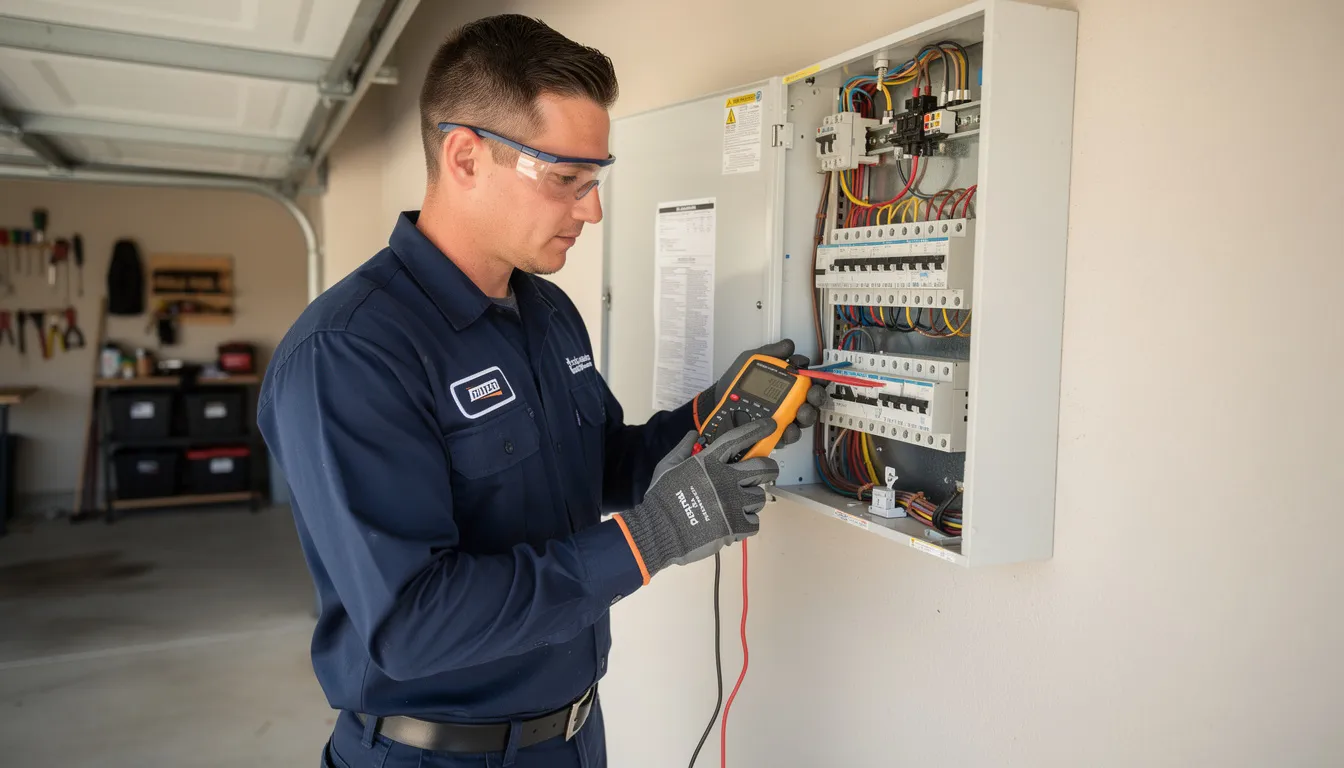
Commercial retrofits cover whatever from office troffers to high bay components in warehouses. I retrofit numerous T12 and T8 troffers with LED panel packages that recycle the existing housings to prevent ceiling grid disturbance. In warehouse aisles in Anaheim and Garden Grove, high bay LED fixtures with important movement and daytime sensing units save huge, because those spaces are not occupied continuously. Retail floorings in Laguna Hills and Brea need high CRI track heads and good beam control so product sings without washing the walls. A commercial electrician Orange County groups employ ought to run a correct photometric check before finalizing counts, particularly in shops with glossy floorings that amplify glare.
Controls increase value
The most affordable watt is the one you never ever burn. Tenancy and vacancy sensors, daytime dimming near windows, and scene controllers pull extra savings from LEDs and extend their already long life. Title 24 requires specific controls for new and modified spaces, however even in retrofits where full compliance is not activated, thoughtful control upgrades pay off. In workplaces, tie bathrooms, copy spaces, and break areas to job sensing units set to 20 minutes. In homes, utilize clever dimmers with clear manual override so visitors are not stuck hunting through an app. If you currently have clever home wiring or a low voltage circuitry foundation, leverage it. If not, a local electrical contractor Orange County based can design a simple, trusted system that does not count on the cloud to switch on a light.
I discovered the hard method not to overcomplicate controls in restaurants. A popular area in Costa Mesa wanted every scene preset. In truth, the host and servers required three: open, service, and close. We streamlined the system, trained the staff, and the calls for help vanished.
A fast method to size the opportunity
Here is a short, useful list I use throughout site strolls to approximate whether a retrofit will return worth quickly.
- Count the lamps over 40 watts or any fluorescent fixtures. Those are first-tier savings.
- Note hours of use for each zone. Anything more than 2 to 3 hours day-to-day is a priority.
- Check dimmers for LED compatibility and label them for replacement if they are not.
- Confirm existing recessed cans are IC ranked if they are in insulated ceilings; strategy gasketed retrofits for air sealing.
- Identify spaces with totally free daylight where we can add a sensor or a greater setpoint to reduce run time.
ROI and the dollars behind the brightness
For a little workplace with forty 2 by 4 troffers running T8 fluorescent lights, swapping to LED panel kits often pays back in 1 to 2 years. Energy stops by about 40 to 60 percent, and upkeep all but disappears. The bigger swing comes when lights are routinely left on in seldom-used areas. Job sensing units in conference rooms and storage places can shave another 10 to 20 percent. Anaheim Public Utilities and Southern California Edison have actually used rebates for certifying DLC listed products in waves for many years. Incentive levels change, and documentation is not fun, but a seasoned Orange County electrical contractor can assist arrange it. I have had projects where refunds covered 10 to 25 percent of material costs.
Residential ROI tends to depend upon two spaces: kitchen areas and great spaces. That is where lights run, where households gather, and where older trim sets and lights burn the most energy. When we retrofit a typical South County home with 30 to 50 essential lamps, the energy savings are obvious, yet homeowners typically wind up most delighted about the improvement in how art work and finishes look. Great light makes money you currently spent on paint and countertops pay off again.
Edge cases and typical pitfalls
Not every light swap is simple. Low voltage MR16 components with magnetic transformers act differently from more recent electronic transformers. Pairing them with the right LED lights and dimmers avoids humming and dropout at low levels. If the transformer is ancient or small, replacement might be the much better path. I have a box of transformers in my truck for a reason.
Three-way and four-way circuits can reveal mystery electrical wiring in older homes from San Clemente to Orange. If a retrofit exposes bootleg neutrals or switch loops that violate existing code, an electrician near me Orange County searches will lead you to should correct that while inside the wall box. Security first.
Enclosed fixtures and insulation contact ratings matter. Not all LED lights are ranked for enclosed components. Setting up the incorrect lamp in a tight enclosed globe can prepare the chauffeur, causing early failure. For recessed lighting Orange County homes typically have insulation piled on cans. IC ranked housings and retrofit kits with correct thermal style are non-negotiable there.
HOAs sometimes specify exterior color temperature levels and component designs. I have had to switch out perfectly great 5000 Kelvin porch lights for 3000 Kelvin to match a neighborhood standard. Before we drill, inspect the guidelines. In beachfront areas, deterioration is a truth. Usage coastal ranked fixtures or accept that less expensive metal will pit within a year.
On the industrial side, watch on emergency egress. When transforming fluorescent to LED, guarantee emergency lighting levels remain code certified, and that battery backups tie into the right unswitched circuits. I once walked into a retail buildout where every light shut off during a power test. Not fun for the fire inspector.
What code expects, and what experience suggests
California Title 24, Part 6, and the California Electrical Code shape the retrofit landscape. For residential, JA8 certified lights and components are frequently required in new work and additions. While many easy lamp replacements do not trigger compliance checks, I still specify JA8 in bathroom and kitchens because the efficiency is consistent: high CRI, low flicker, and checked dimming. Industrial retrofits often require controls like vacancy sensing units and multi-level lighting in particular spaces. It pays to ask your licensed electrician Orange County based to examine the scope and verify whether your strategies count as a change that requires permits.
I likewise look at circuit loading. LEDs minimize draw, which generally assists, however when we integrate a lighting project with other upgrades, like including an electric lorry charger Orange County households desire or new kitchen home appliances, a service examination is clever. A panel replacement Orange County homeowners typically think about is not a little action, yet bundling work can reduce overall expense and reduce downtime. A clear load calc keeps the inspector and your future self happy.
A quick word on AFCI and GFCI. If we replace gadgets or extend circuits, present code might anticipate arc fault or ground fault security in more places than your initial construct had. It is not a trap, it is a safety improvement. Your Orange County electrical repair expert will know when to suggest updated breakers or outlets. An electrical assessment during a lighting retrofit is a chance to capture quietly overheated connections or aluminum branch wiring that deserves unique care.
Product selection that stands the test of time
Chasing the cheapest LED on a shelf is appealing. I have actually paid for that error with callbacks. In homes, I stick to Energy Star or JA8 licensed lights and retrofit packages from brand names that publish clear dimmer compatibility charts. Warranties of five years or more are common and worth something if the manufacturer addresses the phone. Warm dim innovation, where lights shift to a cozier color at low levels, is great for dining rooms and bedrooms.
In industrial spaces, search for DLC listings on troffers, high bays, and outside location lights. It ensures a standard of performance and assists with refunds. Lumen maintenance projections matter. A component that holds 90 percent of its initial output at 50,000 hours keeps your area intense without early replacements. I value great thermal design more than a puffed-up lumen number.
How a tidy retrofit unfolds
Here is the top-level process my team follows to keep jobs on time and free of https://juliuspsln553.timeforchangecounselling.com/knob-and-tube-replacement-orange-county-modern-safety-standards surprises.
- Walk the website, count components, test existing dimmers, note ceiling types, and determine gain access to problems. Collect hours-of-use price quotes and client preferences on color and brightness.
- Propose a sample plan and set up a couple of test locations so the client can deal with the light for a couple of days. Adjust as needed before ordering the complete batch.
- Schedule work by zone to reduce disruption. In homes, cover furniture and isolate dusty areas. In industrial websites, coordinate off-hours work or phased floors.
- Install lamps, retrofit sets, or components, upgrade dimmers or sensors, label circuits, and guarantee emergency and egress lighting remains compliant.
- Commission controls, set sensor timeouts and daylight setpoints, recycle old lights properly, and leave a simple one-page guide with dimmer designs and light specs.
That sample stage saves headaches. I had a customer in Dana Point who swore by 4000 Kelvin for her cooking area. After a weekend trial, she picked 3000 Kelvin since it played better with her wood cabinets. Living with light reveals more than any spec sheet.
Integrating retrofits with the rest of your electrical plans
Lighting modifications frequently sit alongside other tasks. If you are adding an EV battery charger setup Orange County energies like to see documented, think about whether your garage lighting should be improved at the same time. If you are updating your service devices, think of future circuits for outside lighting Orange County yards tend to focus on, from bistro strings to low-glare path lights. Smart home wiring can piggyback on lighting control upgrades; a well-placed control hub can reduce wall clutter.
Whole home rewiring Orange County homes from the 60s or earlier in some cases need ends up being less painful if coupled with a lighting redesign. We can pull brand-new neutrals for contemporary dimmers, clean up switch areas, and remove deserted low voltage circuitry. Taking a holistic view avoids the death by a thousand service calls and lets a finest electrician Orange County house owner selects develop a coherent, recorded system.
Safety, service, and speed matter as much as savings
When lights fail in a commercial area, it is not simply an inconvenience. It is a safety problem and a brand discussion problem. A 24 hr electrical contractor Orange County organizations count on can stabilize a circumstance, then propose a retrofit strategy that avoids a repeat. For homes, a very same day electrician Orange County dispatch can fix a failed transformer or a dead dimmer that is blocking a critical room. I mention this since a lighting retrofit decreases upkeep calls, however it begins with responsiveness. Pick a regional electrical expert Orange County neighbors advise for communication and follow through, not simply a low quote. Budget-friendly electrical expert Orange County searches count for something, however poor craftsmanship gets costly later.
For outdoor poles and parking area, generator installation can be the distinction in between dark and open throughout a power event. It is not common for little retail in Orange County, however important facilities take it seriously. If a retrofit includes emergency circuits or transfer devices, involve a professional who has done it sometimes. Orange County electrical repair after a storm or rise is not the moment to learn on the job.
How to pick the best partner for your retrofit
Credentials are table stakes. Request a licensed electrician Orange County license number and confirm it. Examine that the estimator will be on website at least once throughout the task. Ask how they handle dimmer compatibility screening, and whether they record which products they installed. A top ranked electrician Orange County directory lists should have a clear prepare for guarantee claims, a recycling course for fluorescent lamps, and referrals for jobs comparable to yours. If you run a store in Laguna Beach, you need someone who has actually balanced light levels versus natural daytime and knows how to make wood, textiles, and skin tones shine without overlighting.
Beware anyone pressing a single brand name service across every room. Residences and services are not homogenous. A hallway wants soft, non-glary light. A workshop needs punch and clarity. A bedroom reacts to warm dim much better than a repaired 4000 Kelvin. The very best electrician Orange County house owners keep speed dial asks, listens, and then recommends.
A last note from the field
I as soon as ended up a retrofit in a Lake Forest ranch where the owner was skeptical about LEDs. He had actually attempted a discount pack from a big box and hated the light. We installed high CRI, warm dim trims in the living-room, neutral white in the kitchen area, and cautious undercabinet strips intended to prevent glare on the backsplash. We replaced a picky chandelier dimmer with a suitable ELV unit and tweaked the ramp rates. 2 weeks later on he called, not to grumble, however to request the exact model numbers so he could mirror the setup in a rental he owned. He likewise discussed his kids stopped fighting over who switched off the kitchen lights since job sensors simply did it for them. Little lifestyle modifications add up.
LED lighting retrofits are not magic. They are the straightforward application of physics, code, and taste to the spaces where you work and live. In Orange County, where power is pricey and standards are high, they make specific sense. Whether you want to sharpen your retail screens, drop your office energy costs, or finally make that cavernous terrific space feel warm and even, a thoughtful retrofit gets you there. Start with a discussion, some mockups, and a professional who values both lumens and people.